Manners

The desk where I work at the library is a teaching place as well as a finding place. Parents push their children forward, “Now tell the librarian what you need.” And I ask them, “What can I do for you today?” And so the children learn to articulate their questions, to explain assignments, to interact with an adult, and to be bold. Sometimes they are tiny children who want a picture stamped on their hands. Sometimes they are children who are just learning English and who have come to practice on the friendly children’s librarians. Sometimes they are cranky children who resent their parents and their teachers and every other grownup who participates in the Worldwide Adult Conspiracy. And almost always they are children who are learning the proper use of please and thank-you.

We’ve been running a game in the library this week. Our library elf, Eugene, hides in the children’s section and young people who find him get a small treat. The 2- and 3- and 4-year olds come running out of storytime to search for the elf and collect their prize. Such excitement! Any fear they may have felt at approaching the desk disappears in their triumph.

“I found the elf! I found the elf!” one little girl exclaimed.

“And what do you say?” prompted her mother as she picked a lollipop out of the basket.

“Yum!”

Toys and games

I love toys.  There are toy people and there are game people in this world, and their minds and temperaments are not the same.  I am most definitely a toy person.  I resonate strongly with Pixar people in this regard.  And now that my kids are older and I have no one but myself to buy toys for,  it’s all I can do to keep from buying way more than I can ever justify—even as a children’s librarian. 

It’s just that toys can be so brilliant: little gems of human wit and invention that you can pick up and do something with.  How cool is that!?!   I love paintings, but let’s face it—you can’t play with a painting except in your mind.  And books?  I’m all about books, but I do have a special fondness for truly imaginative toy books.  (For example, Amanda Leslie’s Play Kitten Play. 10 Animal Fingerwiggles.)

I suspect that the toy urge is kin to the “making-faces-at-babies” urge (another impulse I regularly indulge).  You do something silly with your face and you get a reaction—not unlike “What happens if I push this button?” really.  Simple and gratifying.   

So let’s take a break.   I’ll stop talking and you stop reading and let’s all go find something cool to play with.

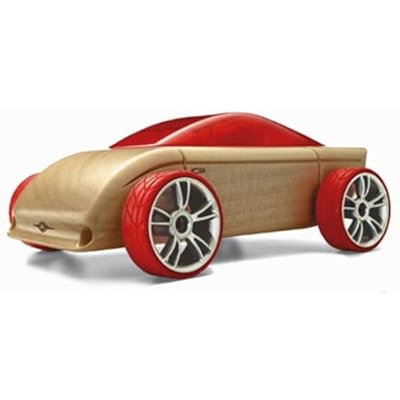
Autobloxstory of automoblox

Choices

It’s inevitable.  You’re teaching an introductory course in (pick one) art history, poetry, music, film, or literature and a student will ask, “Aren’t you reading too much into all this?  Do you really think artists are that deliberate?”  It’s a sort of skepticism left over from society’s head-on collision with modern art, and folks’ lingering suspicion that  they’re being conned.  (I had a teacher once who referred to it as the “My-Dog-Could-Do-Better School of Art History.”)  You try to tell the student, “Yeah.  It’s all there.  They really do think about this stuff.”  But it was Tyra Banks and host of middle-school girls who gave me the metaphor I needed.

Take a look a celebrity walking the red carpet on Oscar Night.  How many choices do you think she made when getting ready?

Was it just the dress?  (You mean this old thing?!)

Did she just put on whatever underwear happened to be clean?  (Or did she consider the possibility of wardrobe malfunctions and plan accordingly?)

Did she open her jewelry box and pull out…whatever? (Necklace? Bracelet? Earrings?)

What about the shoes?  (Could there be more to it than “black or brown?” )

Any thought given to makeup?

And why would anyone care about all that?

As with fashion, you want your art to look “put together,” and that means thinking about it, and making choices.  And once you make those choices, someone’s going to judge them, and interpret them, and maybe be inspired by them.

Threescore and ten

The days of our years are threescore years and ten; and if by reason of strength they be fourscore years, yet is their strength labour and sorrow; for it is soon cut off, and we fly away.
– Ps. 90:10

It’s a hard world for little things. – The Night of the Hunter

Some people like to talk about how subversive children’s books are. I don’t know if that’s true, but I do see a lot of harsh reality in them–even in picture books. We’re all laughing and having a good time, but don’t kid yourself. …

Take for example, Mini Grey’s terrific new book, Ginger Bear.

Ginger Bear

For the past week, I’ve been forcing all my colleagues to read it. And while I’ve seen one reviewer who enjoyed its “barkingmad originality,” I‘ve yet to see anyone praise its gritty realism and dark humor—let me be the first.

Through a series of fortunate events, Ginger Bear, a cookie, escapes being eaten. When he wakes up in the night after all the humans are asleep, he creates an entire circus of cookie friends who gleefully engage in some very risky behavior. (Carpe noctem?) Enter: Bongo the dog (who loves cookies, but not in a way that is necessarily good for cookies) and it’s cookie carnage all over the kitchen floor. Ginger Bear escapes and finds a way he can live happily, and safely, ever after. Whew!

I love the way this story and its wild illustrations make you laugh and force you to confront the harsh truth we all must learn, “a cookie’s life is usually short and sweet.” The message is just as in-your-face as any of the old versions of the Three Little Pigs, but avoids being mean or bitter. There’s good with the bad. There’s joy. There’s hope. Life is short and sweet. And a clever cookie can live a long and happy life.

Too scary for storytime? I don’t think so. We start kids out with tales of cookie mortality like the Gingerbread Man, and before you know it, the dog dies, and Charlotte the spider and Bambi’s mother, and then it’s the grandfather and the girl who’s your best friend. It’s a hard world for little things, right from the start. And while I’m not advocating a steady stream of tear-jerkers (I’m pretty much done done with the dead dog books)—and I’m definitely a fan of zaniness like The Wonderful Wizard of Oz and Whales on Stilts— would you really want to come to King Lear without first knowing what can happen to a cookie in a harsh world?

A little late for Christmas in July

They’re putting out the Christmas things at my local Stuff-Mart, and I confess this makes me cranky. Not just because the Back-to-School items are barely on the clearance aisle, and no one has even thought about their Halloween costumes yet (tho’ I suppose I do know what’s on the menu for Thanksgiving), but because now I am pitted against my fellow consumers in a battle I had hoped to delay.

It’s a true fact—as they say—that there is only a certain quantity of stock that will be set out for Christmas. “Shop early for best selection!” Cheery words if we’re all feeling the holiday spirit, but in September?! In September the only spirit that can possibly motivate serious Christmas shopping is fear and greed:  somebody else will get the good stuff for cheap if I don’t get busy.

I’ve always hated being put in this sort of relationship unnecessarily. We’re all getting along quite nicely, thank you, when someone decides to turn it into a competition. Like the cook for the pizza buffet who, after 45 minutes, when it’s clear that no one in the dining room is interested in the dried-out spinach and pineapple pizza puts out a single pepperoni pie. Everyone rushes to the buffet—but how many pieces should you take? Should you let the little kids go first? And who is this cook who has turned my lunch hour into a moral dilemma?

I understand “creating demand.” I’ve lived through Power Rangers and Pokemon, and I’m not opposed to profit or the desire to sell everything you have out on the floor. Just don’t expect me to cut people off at the knees in response to some faux desperation you’re forcing on me for your economic convenience. I only do that for that last Red Ranger on Christmas Eve.

Parkour

If you haven’t seen parkour, or its cousin free running, then you really ought to get yourself on over to YouTube and take a look.  Or check out the opening to “Casino Royale” for some x-treme parkour (firearms and international intrigue are a movie extra). 

For me, watching an accomplished parkour athlete feels like riding a roller coaster—my internal organs are in freefall, my body wants to launch itself over the nearest railing.  I can only imagine that actually moving this way must be like flying.   And after seeing a few of these videos, I find the urban landscape starts to look a little different.  I’m thinking:  over, under, through.  What used to look like an obstacle becomes a jumping off point.  Things I never noticed now command attention.  (Do skaters’ moms see the world in terms of ramps and rails?   Certainly, when my children were toddlers every sharp corner in the world suddenly appeared to be painted caution yellow.)

Learning feels like parkour to me.  Someone shows you something new and imagination lets you see the world in a different way.  Let go of your fear, give it a try, stick with it, and you may get to fly.   And whether I’m trying to understand a human activity or trying to do it myself, it often starts with an imaginative shift.  Mastery, if it comes, comes much later.  But even if I never get beyond the novice stage, I’m grateful for the chance to try out those lenses.

One more thing:  Kerry Folan had an interesting article in the Washington Post about training sessions at a parkour gym.  Here’s the final paragraph:

After class, no one seems quite ready to leave: Several people linger to rehydrate and rehash the day’s exploits; others continue to mess around on the equipment. Toorock encourages this: “Fun and community are so much more connected to successful training than you could imagine,” he says. “That’s why our program works. I tell people to forget exercise and go play.”

Fun, community, play—the stuff that keeps you going, keeps you engaged, keeps you creative while you sweat.  No matter what hurdle you’re trying to jump.

Dreaming on your feet

My daughter likes to try on shoes.  Especially the ones with 3- to 4-inch heels that she calls “Cram-your-foot-into-the-toe-Barbie-would-approve” shoes.  A Wallabee wearer myself, I’ve done my parental duty and had the Bunion and Hammer Toe Talk, but I try not to be a fanatic.    

So the other day we were in the Target when she spotted some slinky boots with the requisite heels, and then some red shoes with peekaboo toes, and some cork wedges with rainbow straps and we had to stop to try them on.  I waited while she walked off (with only a slight wobble) to look for a mirror and take in the full effect. 

When she returned, my daughter told me about the nice woman with two small boys who’d watched as she checked out the shoes and remarked,  “They’re cute, but you’ll fall.”   

My daughter laughed and the woman continued, “It’s ok.  I try them on all the time.”  

“My mother would never let me get these,” my middleschooler said, and the other mother replied, “It’s okay.  I do it too.  It’s okay to dream.”

Dog Hair

My long-haired beagle-spaniel has entered into that time of year that we call The Big Shed.  Every summer he grows what must be an entirely new coat, and for a brief while his fur becomes as soft and dense as an otter’s.  Then the old coat falls out and I begin to follow him  around with a comb.  The first year I witnessed this process it was startling.  Now I know that I have to be diligent–even annoying–during The Big Shed, or dog hair will become so much more than a mere condiment.

My dog tries to be tolerant, but he hates to be messed with.  For the next few months he will regard me with suspicion:  Is she hiding a comb?  Is she going to pick at my fur again?  Finally, The Big Shed will move from his haunches to his back to his ruff and be over.  And then we will be free to be ourselves again.

Let’s talk

Sometimes I think people have forgotten what it means to converse.  Okay, not everyone has forgotten, but enough folks for me to take notice. 

We all know that “debate” has largely gone down the tubes.  All you get at a debate these days is one person stating a position followed by another person stating his or her position.  It doesn’t really matter if they agree or disagree–how would they know?–their minds will never touch.  No one ever changes his position, not even in the audience, because there is no fruitful examination of the merits of the ideas expressed.   

But if we take these same ideas and put them in the context of a conversation or discussion, then in theory, the speakers’ behavior should change.  It’s a different game.  If good debate is about refutation and persuasion, then good conversation, it seems to me, should be about the refining of our understandings and solutions.  Conversations should be the place where we work things out to our mutual benefit—the forum where we clarify our understanding.   And while the process can be rough and tumble (“Are you guys fighting?” “No, we’re having a discussion.”), the shared committment to moving ahead makes it worth the effort to continue.

20+ endings

The Campfire Crush

The “Choose Your Own Adventure” format has made its way into young adult chick lit with the “Choose Your Boyfriend” books.  As they say on the cover, “If you’ve ever wondered ‘What if…?’ when it comes to boys and dating, Date Him or Dump Him?  is a fun, interactive series that lets you navigate the ups and down of the dating scene.”

My daughter read one of these the other day.  Her review:  “It’s sort of like a first-person shooter with boys.”  (Ah, the metaphorical stockpile of youth!)